WHAT'S A SCREENPRINT?
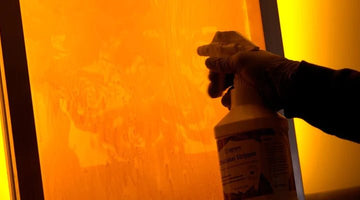
A screenprint is a reproduction created by pulling INK through a MESH with a SQUEEGEE. At Sage Studios, we make our stencils by coating the mesh with liquid emulsion, letting it dry and then exposing it to light. The art is on a FILM POSITIVE. After exposure, the screen is washed out, the pinholes are blocked, the edges of the screen are taped up, and it's ready for the press.


Textiles, paper and stickers all require different inks.
The main kind of fabric ink we use at Sage Studios is waterbased. DISCHARGE ink is used to print lighter colours onto dark fabrics. It works by removing the dye in the garment when activated with heat....the design actually becomes the shirt...or something like that.
Discharge inks have a much softer texture and wear and fade nicely with the garment over time. They have a matte finish, they are less graphic in nature than plastisol inks, and they're especially good for distressed prints , vintage-style prints, lightweight garments and underbasing on dark garments that are to be printed with additional layers of plastisol.

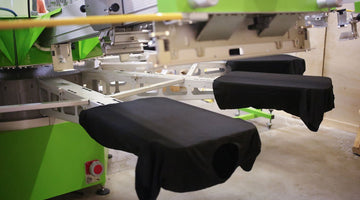
In garment printing the most common ink is PLASTISOL. It is opaque, can be layered up and is very durable. It can be made softer with special additives, or thicker. It can puff up, sparkle, and glow in the dark. There are a number of plastisol additives for various materials and various effects. Polyester, for example, might need stretch additive and dye block, whereas nylon needs an adhesive catalyst.
We are currently sampling a new line of bamboo garments, including fantastic ladies cuts and full zip hoodies......all fabricated right here in Canada.

We screenprint on PAPER with the highest-quality waterbase inks. TW Graphics makes a superior waterbase ink, in both gloss and matte. Speedball also offers an extensive line of screenprinting inks, starting with hobby-level inks and kits for beginners. The tricky part about printing with waterbase ink is not letting it dry in the screen, which means getting the relative humidity in the room UP, pre-wetting your screen so the emulsion doesn't suck all the water out of your ink, and racking your paper in advance, to acclimatize it.....and then working quickly once the ink is in your screen!
Sage Studios is currently sampling a new line of recycled, acid-free poster papers to add to the list of stock papers in-house.


STICKERS can be printed with the same TW waterbased inks that we use for posters, but aren't as opaque as solvent-based inks if you're printing on clear material. A solvent-based ink is used for stickers to achieve maximum opacity and durability. There are a number of sticker papers available, from white to clear, coloured, kraft, chrome, gold, static cling and magnetic sheets.
Recent demand for less harmful products has resulted in an amazing new sticker paper made of stone dust from quarries and a resin, with waterless technology. They make coated inkjet and offset papers as well. Sage Studios looks forward to testing some of these and more new, biodegradable materials, and we'll post any and all findings on this site.
The screenprinting industry is constantly coming up with new products and systems. It can all be a bit overwhelming, but REMEMBER: the process itself of screenprinting hasn't changed in well over 1000 years - only the materials!